Paper stamp cards vs digital: which suits your shop?
Where paper wins
It costs almost nothing, everyone understands it, and it needs no phone. A stamp takes a second and works when the power or the wifi is off. If your regulars are happy with it, you may not need to change.
Where paper loses
Cards get left in another jacket, go through the wash, or sit in a wallet with a stack of others. A customer who forgets theirs usually loses the visit, or you stamp a loose receipt and lose track. Changing the reward means reprinting. And you learn nothing about who comes back.
Where digital wins
Customers cannot leave it at home, forget a stamp, or lose it in a coat. You can change the reward without reprinting. You see how many stamps are given each day, which paper cannot tell you.
How The Usual works
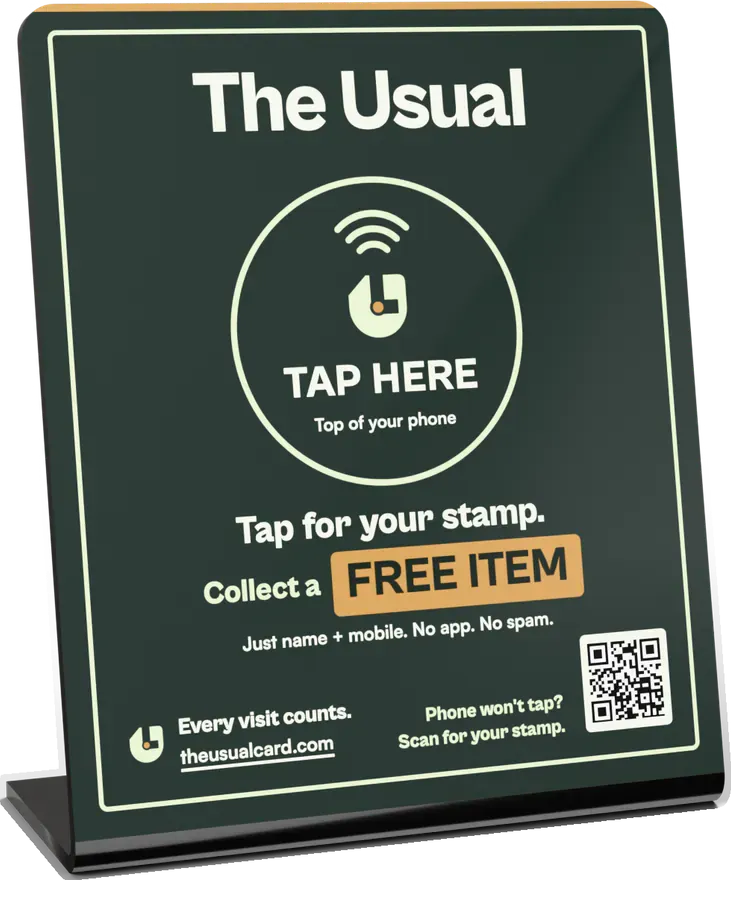
A small stand sits at the counter. The customer taps their phone on it and their card opens in the browser, with no app to install. The first time they give a first name and a mobile number. After that it is one tap per purchase.
What digital costs
With The Usual it is A$49 a month per shop, with a month free to try it. A stand is A$15, or A$20 with a custom design, both paid once. Prices include GST where it applies. Customers need a smartphone, so a few will still want paper. Phones that cannot tap can scan a QR code on your counter poster instead.
What we keep
A first name and a mobile number, so a customer can get their card back on a new phone. No email, birthday or location, and we do not sell it.
Changing over without a fuss
You do not have to bin the paper cards on day one. Put the stand next to them, tell regulars about the phone card at the till, and let people move across when it suits them. The Usual cannot read old paper stamps, so decide how you will honour them before you switch.
Questions worth asking
How many of your regulars carry a smartphone? How often does someone turn up without their card? Would you like to know how many stamps you hand out in a day? If the answers are most, often and yes, digital is worth a week of your time. If they are few, rarely and no, paper is doing its job.
Our pick
Try the free month and keep paper cards on the counter for anyone who prefers them. If most of your regulars end up on the phone card, you will know within a few weeks, and you can stop paying if they do not.